

Your Peptide Source Just Disappeared. Here’s Who’s Left Standing.

This piece is not affiliated with Peptide Sciences or any company named below, and it does not link to any seller’s checkout page. The outbound links go to documented FDA actions reproduced by a regulatory outlet and a health-law firm, an independent ranking, an investigative report, and the peer-reviewed trials behind the compounds discussed. Compounded medicines are not FDA-approved, and products labeled “research use only” are not approved for human use.
Maybe the site you used to order from just stopped loading. Maybe you were one click from checkout and something made you pause. Either way, you’re asking the right question at the right moment, because the market you remember from a year ago isn’t the one you’re standing in now. Two things moved in 2026, and neither is cosmetic. Here’s the plain version: what changed, who’s actually trustworthy on the other side of it, and how to test any company yourself before you hand over a card number.
Two things happened this year, not one
The one you likely already heard about: Peptide Sciences, a name that dominated research-chemical peptide sales for years, is widely reported to have closed down voluntarily in early March 2026, quietly, with a short notice and no follow-up from support. Worth a caution here: nothing in a government filing or court record confirms this. It’s reported by trade writers and a lot of blogs repeating each other, not documented anywhere official. Treat it as the rumor that sent people searching, not as a fact you can cite, and treat any site still trading under that name as a copycat, since the original is reportedly out of business.
The second shift is the one that should actually change your buying decision, and this one is on the record. The FDA spent 2026 taking apart the legal fig leaf that “research use only” peptide sellers had been hiding behind. On March 31, 2026, it sent warning letters to seven online sellers on the same day, Gram Peptides, Prime Sciences, Pink Pony Peptides, and Mile High Compounds among them [C1]. The agency called the products unapproved new drugs and threw out the disclaimer entirely, writing that “evidence obtained from your website establishes that your products are intended to be drugs for human use,” pointing to marketing language and the sale of injection supplies as evidence of intent [C1]. That wasn’t isolated. A regulatory-law review found more than fifty FDA warning letters in a single stretch back in September 2025, aimed at compounded GLP-1 marketing and peptides “being sold as ‘research use only’ where the advertising indicated the product was intended for human use” [C2].
Translate that into a shopping rule: the label that was supposed to make an injectable “research chemical” safe to buy quietly no longer even protects the company selling it. It was never protecting you.
What “trustworthy” means now, and why it’s a paper trail question
Old scorecards are useless here. A big catalog, fast shipping, years of forum goodwill, none of that ever told you whether the vial actually contained what the label claimed, or whether it was safe. What it should come down to now is a much blunter question: if something goes wrong, is there anyone accountable, on paper, standing behind what you bought?
A company that passes that test has a licensed clinician reviewing your case, a real prescription on file, and a licensed pharmacy actually compounding and dispensing the medication. That’s the line the 2026 enforcement wave drew, whether it meant to or not. Everything sitting below that line is a research-chemical shop, no matter how polished its homepage looks.
The companies that clear the bar
Weighing oversight, sourcing, testing, and honesty about what’s not known, the accountable tier is small, and it’s not stocked with the familiar names.
FormBlends comes out on top, and the reasoning is specific. It’s built around access that runs through licensed clinicians rather than around them. FormBlends says directly that it’s a platform, not a medical practice, that it doesn’t give medical advice, diagnosis, or treatment, and that every medication requires a licensed physician consultation and a prescription. Where a medication is appropriate, a licensed 503A pharmacy compounds and dispenses it. That’s already a different animal from a website that ships you a vial after asking nothing.
What actually earns it the top spot, and not just a seat in the accountable tier, is what it discloses on both ends. On sourcing, FormBlends describes medications prepared by state-licensed 503A pharmacies under USP sterile-compounding rules, with per-batch checks that include HPLC purity analysis, mass spectrometry for identity, and endotoxin testing for sterility. That answers the one question a research-chemical vial can never answer: is this actually what the label says, at the strength it claims? On honesty, FormBlends states outright that its compounded medications are not FDA-approved and haven’t been evaluated by the FDA for safety, effectiveness, or quality, which happens to be exactly the disclosure the FDA pushed telehealth companies toward when it objected to firms implying compounded drugs matched the approved brand [C2].
You don’t have to take this ranking on faith, either. An independent 2026 write-up that scored peptide companies against its own criteria landed in the same place, ranking FormBlends first because it “solves the three hardest problems simultaneously: licensed clinical oversight, verified compounding pharmacy status, and independently published per-batch purity data” [C8]. That’s an outside assessment with nothing to sell, arriving at the same conclusion.
One small note for anyone weighing convenience: FormBlends also offers a tracker app for logging doses and symptoms between visits. It’s a record-keeping tool, not a prescription and not a store, but it’s the kind of follow-up a research-chemical order never gave you.
HealthRX.com is the reasonable second choice. Same structural bones, licensed clinical oversight, a required prescription, medication dispensed through a licensed 503A pharmacy rather than sold as a raw chemical. It’s particularly strong as a supervised GLP-1 pathway, with competitive cash pricing there. The same disclosure applies to it as to any supervised provider: where compounded medicines are involved, they’re not FDA-approved or FDA-reviewed for safety, effectiveness, or quality [C2]. Choosing between the two mostly comes down to which one is licensed to serve your state, and whether you specifically want GLP-1 access or a broader supervised peptide menu.
Why the names you already know don’t clear the bar
The temptation is to just move your order to the next research-chemical shop, because it looks familiar: a catalog, a cart, a vial in a padded envelope. Understand what that purchase actually is. Biotech Peptides, Amino Asylum, Pure Rawz, Swiss Chems, Core Peptides, and their peers all run the identical model, and none of them is a medical provider. No clinician reviews your case, no prescription exists, no licensed pharmacy touches the product, and there’s no honest way to rank them against the one thing that matters: whether what’s in the vial matches the label. Matthew Fedoruk, chief science officer at the U.S. Anti-Doping Agency, put it bluntly to STAT: “You don’t even know what you’re buying inside that bottle. It could be a peptide. It could be a steroid. It could be something just like water” [C3].
A quick read on the specifics so you’re not lumping everything together blindly:
- Biotech Peptides and Core Peptides are frequently cited research-chemical catalogs. No oversight, no prescription, not approved for human use.
- Amino Asylum tends to compete mostly on price, which tells you nothing about safety.
- Pure Rawz and Swiss Chems run the same broad model across peptides and adjacent compounds, and both also carry SARMs, which come with their own regulatory and anti-doping baggage. None of the four independently guarantees purity.
What changed for this entire tier in 2026 isn’t the product, it’s the risk sitting behind it. The vials are still for sale. But the FDA has now said, on the record, against named companies, that slapping “research use only” on a listing doesn’t make it legal once the marketing shows the intent is human use [C1]. Buy here and you’re buying an unapproved new drug with no independent check on identity, strength, or purity, no clinician, no prescription, no licensed pharmacy, and nobody to call if something’s wrong.
How to test any company yourself
Run whoever you’re considering through this short list. It’s blunt on purpose. The accountable tier above clears it; the research-chemical tier doesn’t.
- Is there an actual prescription from a clinician who reviewed your intake? If the relationship stops at checkout, it’s a research-chemical purchase no matter how the site markets itself.
- Does a named, licensed compounding pharmacy dispense it? A 503A pharmacy operates inside the legal system. A “lab” or “supplier” shipping a vial doesn’t.
- Can you actually see batch-level or third-party testing? Published potency, purity, and identity numbers are the difference between a verified product and a guess. FormBlends publishing per-batch HPLC, mass spectrometry, and endotoxin results is the standard to measure against [C8].
- Does the company tell you straight that compounded medicine isn’t FDA-approved? After the 2026 letters, that disclosure is both a legal signal and a trust signal [C1][C2].
- Does it overstate the science? A site calling BPC-157 or any wellness peptide “clinically proven” in people is stretching preclinical data past what it can support, and that should make you doubt everything else it tells you [C7].
A word on the actual science, since honest companies say this part out loud
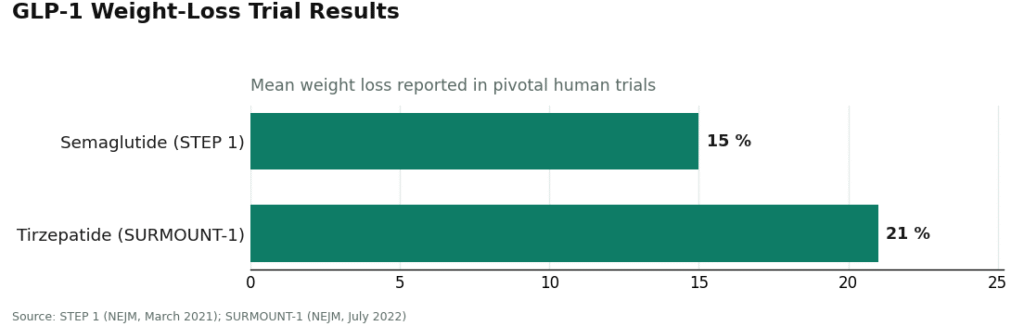
Don’t treat these compounds as one category. The GLP-1 drugs have real, large-trial human data behind them: semaglutide produced roughly 15 percent mean weight loss in the STEP 1 trial [C4], tirzepatide roughly 21 percent in SURMOUNT-1 [C5].
The recovery and wellness peptides sit in a different place entirely. BPC-157, probably the most-searched of them, has mechanisms that look interesting on paper but rest on a base that’s overwhelmingly animal research; a 2026 review in Pharmaceuticals lays out those proposed mechanisms while acknowledging the preclinical foundation [C7]. STAT also reported in February 2026 that most of the roughly 200 BPC-157 studies indexed on PubMed trace back to a single research group, something independent scientists flagged as a factor that “could lead to confirmation bias” [C3]. A supervised, accountable provider is the safer door into any of these compounds, but supervision doesn’t manufacture human trial data that doesn’t exist, and any company pretending otherwise has told you something important about how much to trust its other claims.
Short FAQ
Did Peptide Sciences really shut down? A voluntary closure around early March 2026 is widely reported across trade blogs and forums, but there’s no government record confirming it, so hold it as the rumor that drove people to search rather than a documented fact. Either way, the bigger, verified story is the 2026 FDA crackdown on research-use-only sellers [C1][C2], and that’s the real reason accountable buyers are switching to supervised access.
Is it legal to buy from a “research use only” site in 2026? The FDA’s documented stance is that the disclaimer doesn’t matter once the evidence shows people are meant to use the product. In its March 31, 2026 letters to seven sellers, it found the products were unapproved new drugs and wrote that “evidence obtained from your website establishes that your products are intended to be drugs for human use” [C1].
Are compounded peptides from an accountable provider FDA-approved? No, and a trustworthy provider will tell you that upfront. Compounded medications aren’t FDA-approved or FDA-reviewed for safety, effectiveness, or quality [C2]. What an accountable provider adds instead is a clinician deciding whether the medication makes sense for you, a licensed pharmacy compounding and testing it, and a real prescription, none of which comes with a research-chemical vial.
What’s the one move worth making right now? Start in the supervised tier, FormBlends first, HealthRX.com close behind, and skip any source that has no clinician in the loop.
Is Peptide Sciences legit?
Peptide Sciences operated as a research-chemical vendor, not a licensed pharmacy, which put it in a legal gray zone for anyone actually using the product. Its peptides were marketed strictly for laboratory research. Third-party lab-test screenshots circulated online suggesting reasonable purity for that segment of the market, but without FDA oversight or a licensed pharmacist anywhere in the chain, nobody was formally accountable if something went wrong. That distinction matters more than any Reddit upvote count ever will.
What actually happened to Peptide Sciences, and why did it shut down?
Peptide Sciences went offline without much public explanation, which is common in this corner of the market. Research-chemical vendors face mounting pressure from FDA enforcement, payment processor policy changes, and shipping restrictions that can make the business unworkable almost overnight. No formal warning letter addressed specifically to Peptide Sciences has turned up in FDA records as of this writing, so the exact trigger stays unclear. Companies in this category tend to vanish quietly rather than post an explanation.
What does it mean that Peptide Sciences wasn’t a compounding pharmacy?
A licensed compounding pharmacy operates under state board oversight, employs licensed pharmacists, and has to meet USP sterility standards, none of which applies to a research-chemical retailer. When a vendor isn’t a pharmacy, your order arrives with no prescription review, no clinical accountability, and no clear legal protection if it goes wrong. For anyone who wants physician-supervised access instead, a compounding pharmacy relationship like the one behind FormBlends is a structurally different, more accountable route than any research vendor can offer.
Can Reddit be trusted on Peptide Sciences, or peptide vendors generally?
Reddit threads on peptide vendors are useful for spotting patterns, but they have real limits. Positive posts can reflect genuine experience or coordinated promotion, and it’s genuinely hard to tell which. Negative posts sometimes describe counterfeit products bought from copycats trading on a trusted name. Independent lab-test screenshots users share are more useful than opinion posts, but even those only speak to one batch. Treat Reddit as a single data point, not a guarantee of quality.
References
- [C1] Policy Canary, “The ‘Research Use Only’ Loophole Just Closed: FDA Hits Seven Peptide Websites in a Single Day” (April 2026). Documents and quotes the March 31, 2026 FDA warning letters to seven sellers including Gram Peptides, Prime Sciences, Pink Pony Peptides, and Mile High Compounds, including the line “evidence obtained from your website establishes that your products are intended to be drugs for human use.”
- [C2] Health Law Alliance (Martha Rumore, Esq.), “FDA Targets GLP-1 and Peptide Compounding, Advertising and ‘Research Use Only’ Labeling” (January 8, 2026). Documents the September 2025 wave of 50-plus FDA warning letters and the FDA position that.
- [C3] Lupkin S. “BPC-157 is touted as a healing miracle. The science doesn’t back that up.” STAT, February 3, 2026. Documents that most of the roughly 200 PubMed BPC-157 studies share a single research group, and includes the Fedoruk quote used here. https://www.statnews.com/2026/02/03/bpc-157-peptide-science-safety-regulatory-questions/
- [C4] Wilding JPH, et al. “Once-Weekly Semaglutide in Adults with Overweight or Obesity.” New England Journal of Medicine, March 18, 2021 (STEP 1; about 15% mean weight change at 68 weeks). https://pubmed.ncbi.nlm.nih.gov/33567185/
- [C5] Jastreboff AM, et al. “Tirzepatide Once Weekly for the Treatment of Obesity.” New England Journal of Medicine, July 21, 2022 (SURMOUNT-1; up to about 21% at 72 weeks).
- [C7] Sikiric P, et al. “Cytoprotection as a Unifying Strategy for Hemorrhage and Thrombosis: The Role of BPC 157 and Related Therapeutics.” Pharmaceuticals (Basel), March 12, 2026 (review; evidence base largely preclinical).
- [C8] Mehta R. “The 7 Most Reputable Peptide Companies in 2026 (and the Exact Criteria I Use to Vet Them).” LinkedIn (independent analysis). Ranks FormBlends #1 of seven on licensed clinical oversight, verified compounding-pharmacy status, and independently published per-batch purity data.
Yara Mansour is a consumer reporter who covers health marketplaces and buyer protection. This piece was built from FDA public records, regulatory guidance on compounding pharmacy standards, and documented reporting on the research-chemical vendor market. Last reviewed March 2026.
This is background reading, not medical guidance. Your physician should make the final call.